Vertical farming is rapidly reshaping modern agriculture, offering a more efficient and sustainable alternative to traditional farming. By growing crops in vertically stacked layers within a controlled environment, this innovative farming method enables consistent food production even in densely populated urban areas.
While vertical farming may seem far from industrial production, the operational challenges are surprisingly similar—and that’s where BeeWaTec solutions come into play.
What is Vertical Farming?
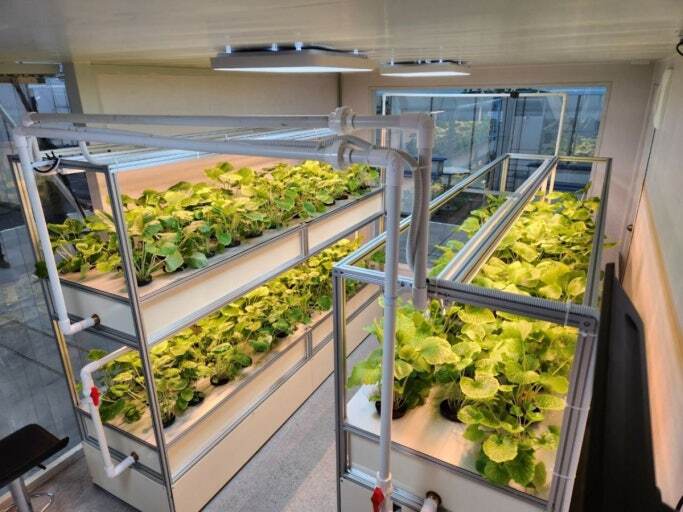
Vertical farming is an advanced farming technique that involves growing crops indoors using systems like hydroponics (also known as hydroponic cultivation) and Controlled Environment Agriculture (CEA).
These systems often operate in:
- High-tech greenhouses
- Repurposed shipping containers
- Fully automated indoor farms
Unlike traditional farming, vertical farming uses less water, requires minimal land, and allows crops to grow vertically, maximizing space efficiency.
Challenges in Modern Vertical Farming
Despite its advantages, vertical farming comes with operational complexities:
- Managing nutrient flow in hydroponics systems
- Ensuring smooth movement of plants and materials
- Maintaining efficiency in a controlled environment
- Scaling operations in limited urban areas
- Supporting consistent and high-quality food production
These challenges closely mirror those found in industrial environments.
Benefits of Vertical Farming
Vertical farming is transforming modern agriculture by offering a more efficient and sustainable alternative to traditional farming. Here are its main advantages:
Efficient Use of Space
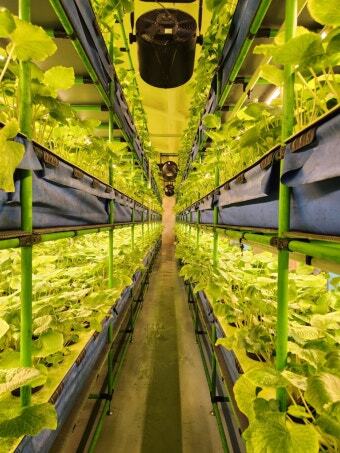
By growing crops vertically, farms can produce more in a smaller footprint—making it ideal for dense urban areas where land is limited.
Less Water Consumption
Compared to traditional farming, vertical farming—especially hydroponics—uses significantly less water by recycling and precisely controlling nutrient solutions.
Year-Round Food Production
Operating in a controlled environment allows consistent crop growth regardless of weather conditions, ensuring stable and predictable food production.
Reduced Transportation
Since vertical farms are often located in cities, closer to consumers, they reduce transportation needs, lowering costs and environmental impact.
Higher Yield & Productivity
Advanced farming techniques and optimized conditions lead to faster growth cycles and higher yields compared to conventional farming methods.
Minimal Use of Pesticides
Indoor farming in controlled conditions reduces exposure to pests, decreasing the need for harmful chemicals.
Scalability & Flexibility
Vertical farms—whether in greenhouses or shipping containers—can be easily expanded or modified, making them adaptable to changing demand.
Sustainability
With efficient resource use, reduced land requirements, and lower emissions, vertical farming supports a more sustainable future for agriculture.
How BeeWaTec solutions support vertical farming
Although vertical farming is not a traditional target market, BeeWaTec systems are built to solve exactly these types of challenges—efficient flow, modular design, and ergonomic handling.
Optimized Material Flow
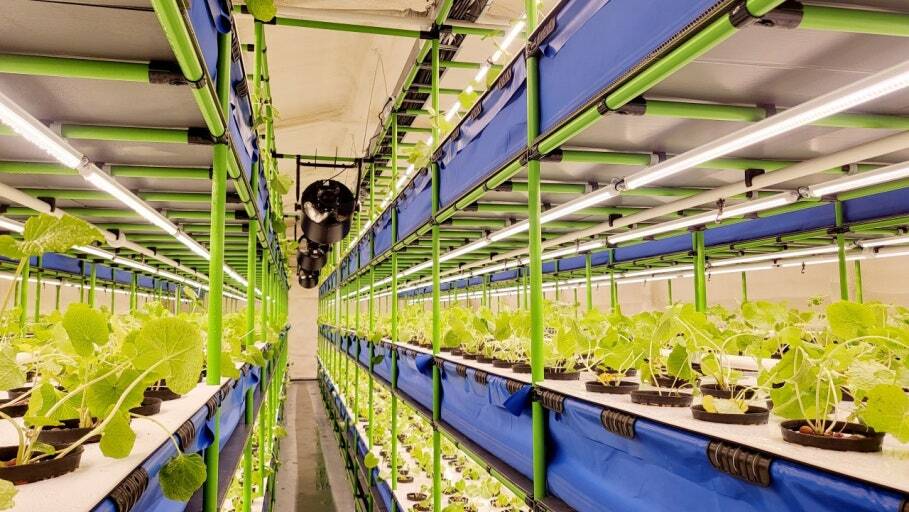
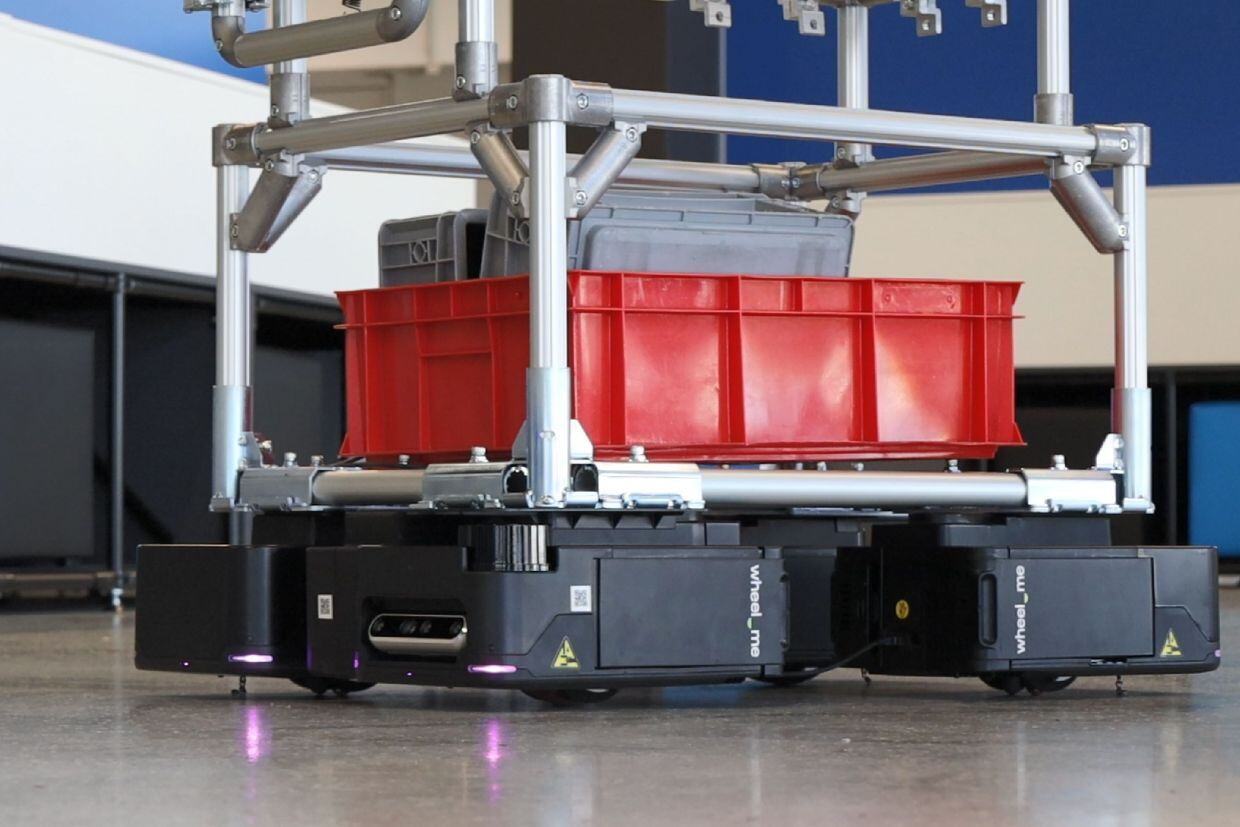
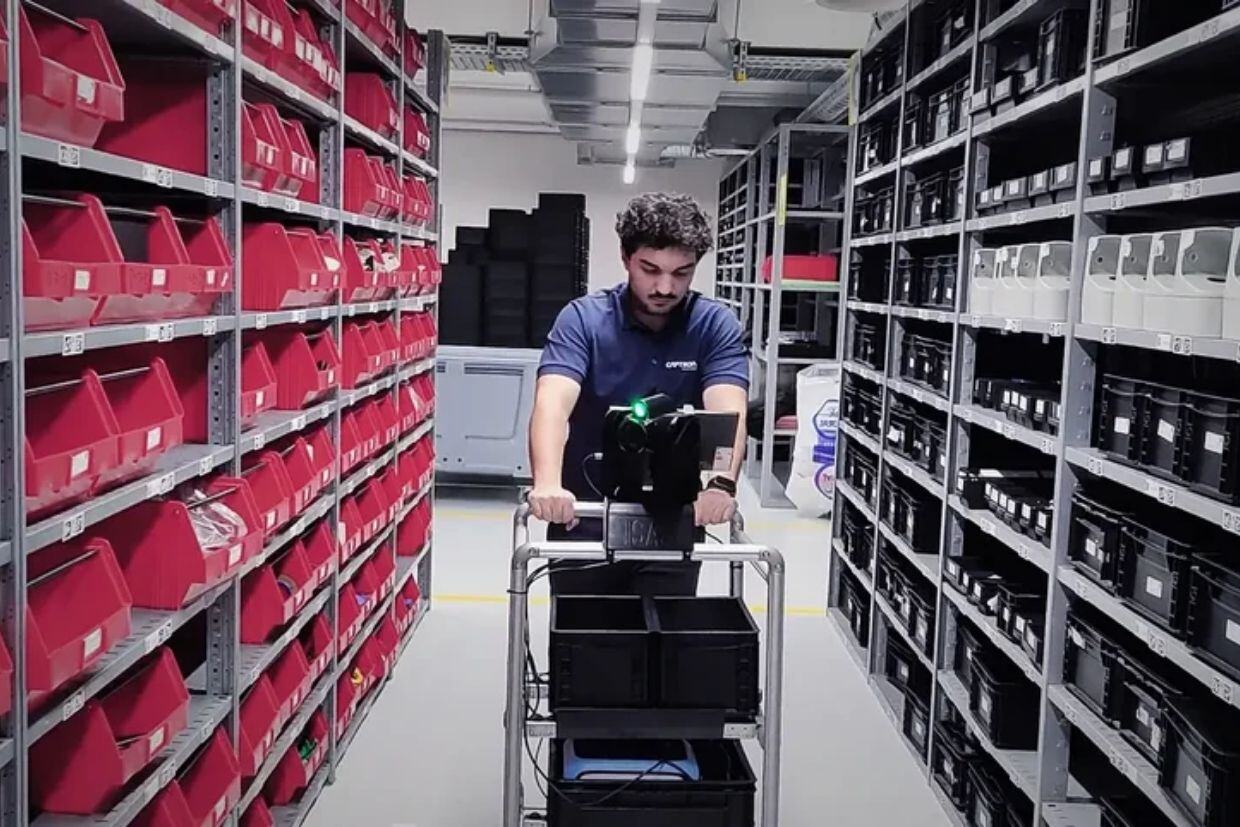
From seeding to harvesting, plants and trays must move efficiently through different stages. BeeWaTec flow racks and conveyor structures help streamline movement in hydroponic farming systems, whether in a greenhouse or shipping container setup.
- Reduced handling time
- Improved process flow
- Better organization of materials
Modular & Scalable Systems
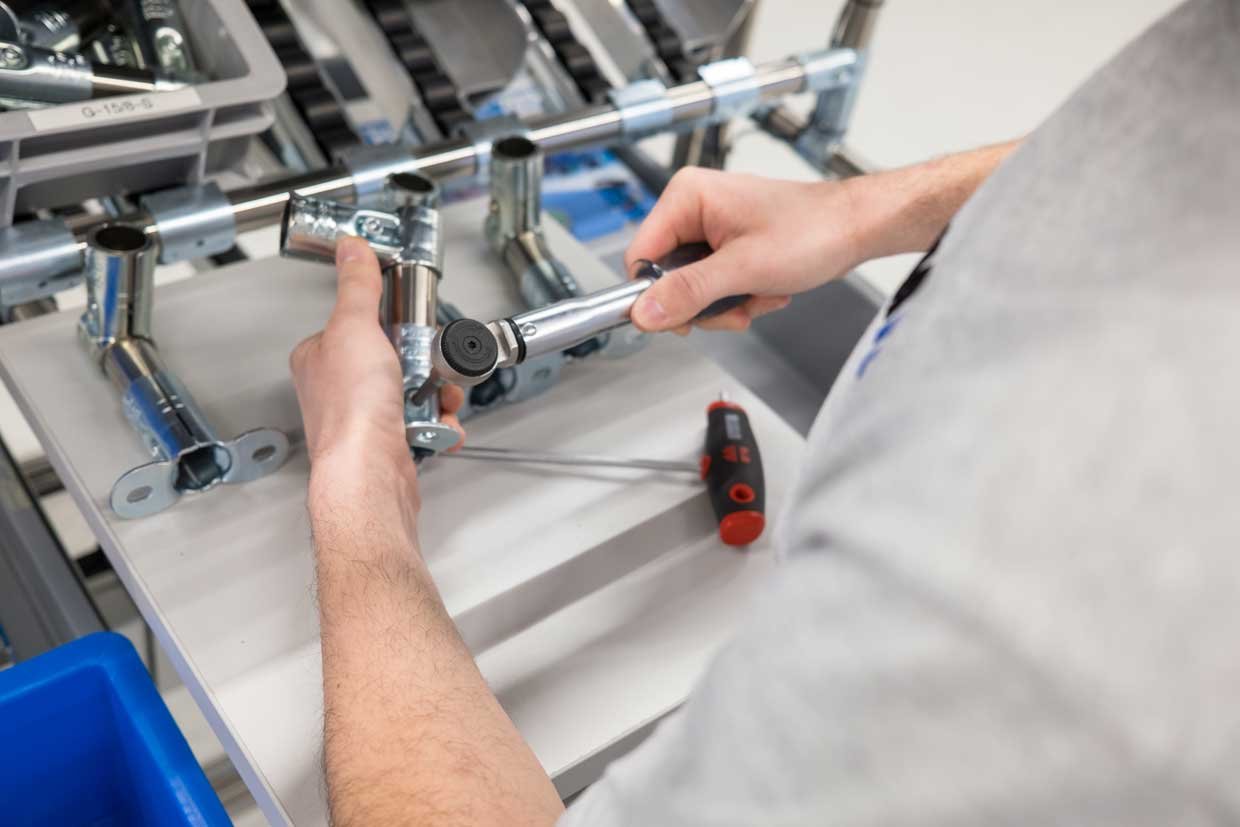
Vertical farms in urban areas often need to expand quickly. BeeWaTec’s modular pipe-and-joint systems allow farms to scale without major redesign.
- Easy expansion of growing systems
- Flexible layouts for different farming methods
- Adaptability to changing production needs
Ergonomic Workstations
Repetitive tasks in hydroponic and indoor farming environments can impact worker productivity. Ergonomic workstations improve comfort and efficiency.
- Adjustable structures for different tasks
- Reduced physical strain
- Safer working conditions
Efficient Space Utilization
In vertical farming, every square meter matters. BeeWaTec solutions help optimize layouts to support vertical growing systems and structured workflows.
- Better use of vertical and horizontal space
- Organized storage and movement
- Increased output in limited space
Supporting Controlled Environment Agriculture (CEA)
BeeWaTec systems integrate seamlessly into controlled environment setups, supporting structured processes essential for modern CEA and advanced farming techniques.
- Clean and organized infrastructure
- Reliable support for sensitive growing conditions
- Improved operational efficiency
Why Vertical Farming Needs Industrial Solutions
As Controlled Environment Agriculture (CEA) evolves, the demand for efficiency continues to grow. Vertical farms must balance:
- Precision nutrient delivery
- Efficient workflows
- Scalable infrastructure
- Sustainable resource use (less water, less waste)
This is where industrial expertise can make a real difference.
The Future of Farming
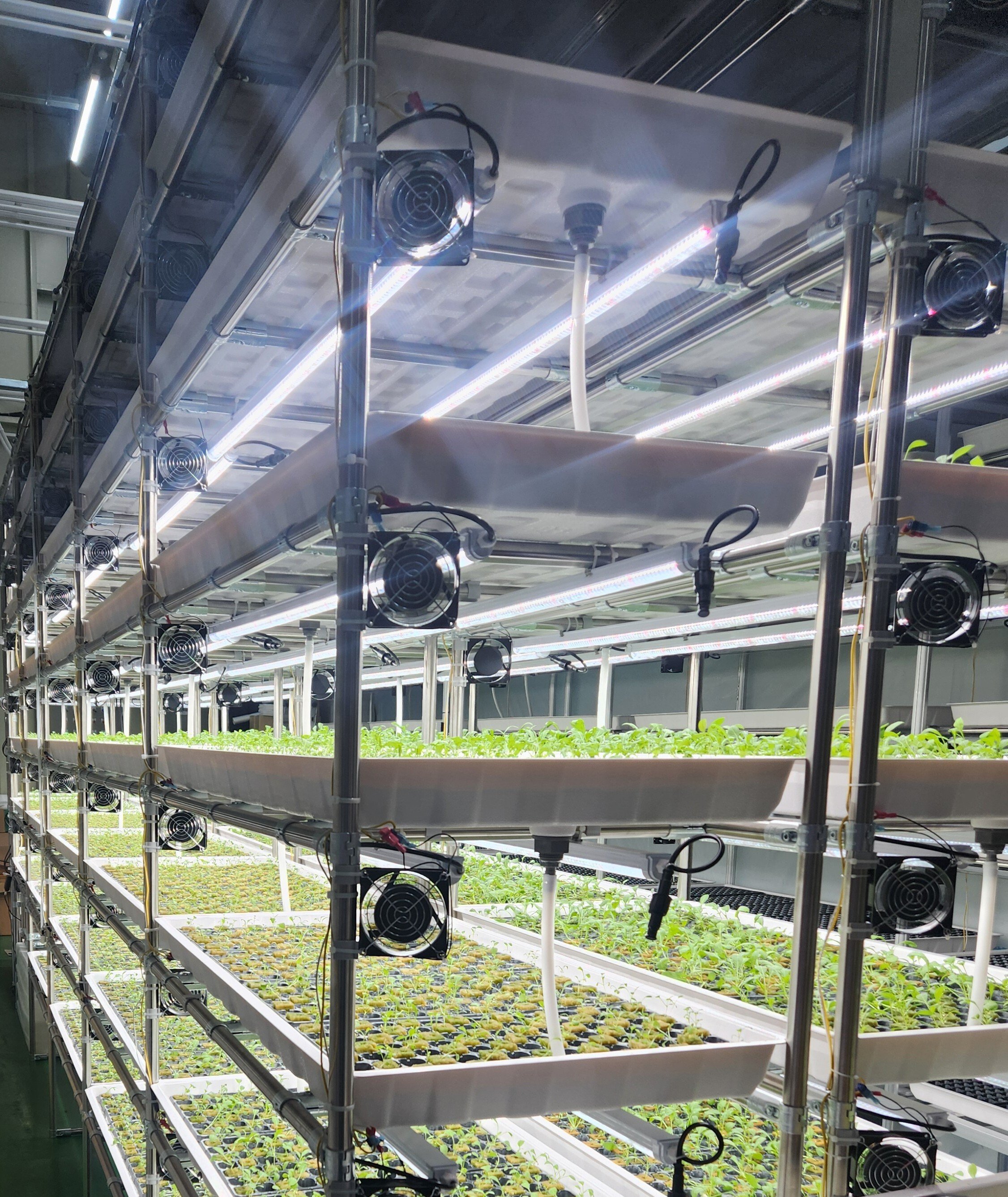
The future of agriculture lies in smart integration—combining innovative farming methods like hydroponics with proven industrial systems.
Vertical farming is not just a trend—it’s a shift toward sustainable, efficient, and localized food production.
For BeeWaTec, this represents an opportunity to:
- Extend solutions beyond traditional industries
- Support innovation in urban agriculture
- Enable efficient and scalable farming systems
Conclusion
Vertical farming may operate in a controlled environment, but its success depends on efficient processes—just like any industrial system. From managing nutrient flow in hydroponics to organizing plant movement through different growth stages, consistency and efficiency are key.
Often set up in greenhouses or shipping containers within dense urban areas, these farms rely on smart layouts, smooth workflows, and scalable systems to ensure reliable food production while using less water and space.
By applying lean principles and modular design, BeeWaTec brings industrial efficiency into modern agriculture—helping optimize operations, reduce manual effort, and support flexible farming methods that are ready for the future.

_Web_01_01.jpg?width=1240&name=Beewatec-3-(37)_Web_01_01.jpg)

 Rainer Buckenmaier
 Jens Walter : 24.Juli.2023